Martin McDonagh’s Seven Psychopaths (2012) is a wildly inventive, darkly comedic meta-thriller that gleefully blurs the line between reality and fiction. At its heart is struggling screenwriter Marty (Colin Farrell), who gets caught up in a violent mess when his eccentric best friend Billy (Sam Rockwell) steals a gangster’s beloved Shih Tzu. The gangster, played with unhinged menace by Woody Harrelson, is willing to kill anyone to get the dog back.
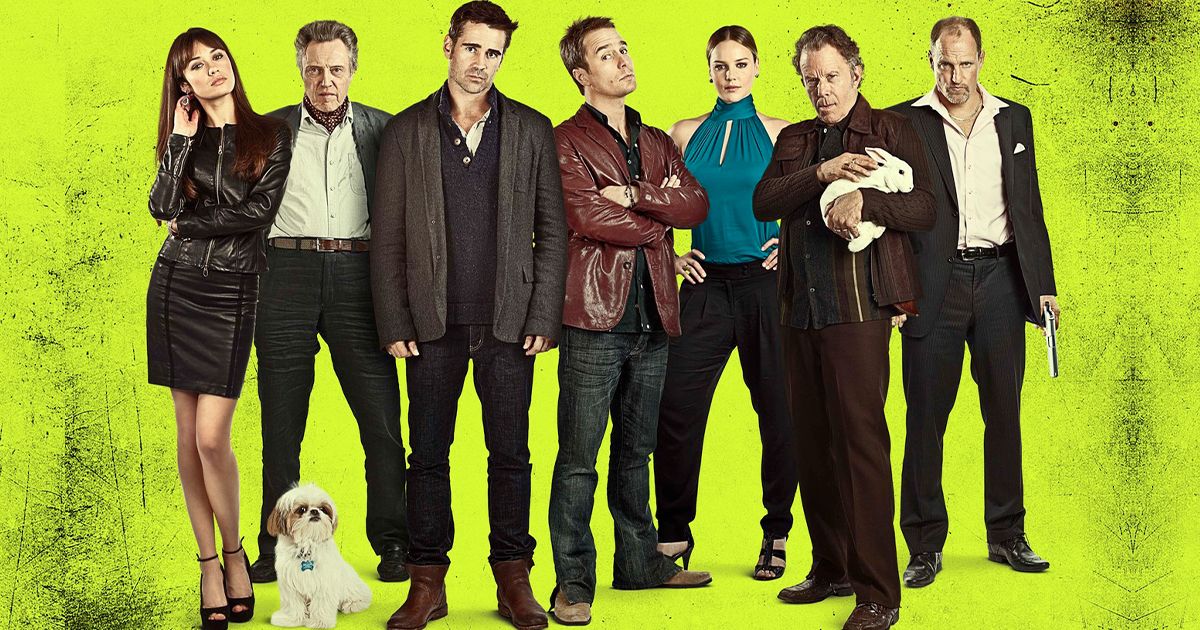
The film isn’t just about a dog-napping gone wrong—it’s a self-aware exploration of storytelling itself. Marty is trying to write a screenplay titled Seven Psychopaths, and as events unfold around him, the psychopaths begin to emerge both in his writing and in real life. This clever narrative layering gives the film a surreal, unpredictable edge.
Sam Rockwell is a standout, delivering a manic, hilarious performance that drives much of the film’s momentum. Christopher Walken, as the quietly intense Hans, adds a layer of tragic depth and deadpan charm. Farrell anchors the madness with his dazed, passive character, often bewildered by the chaos around him.
McDonagh’s screenplay is whip-smart, packed with absurd humor, philosophical musings on violence, and gleeful genre subversions. At times, it feels like a satire of Hollywood’s obsession with bloodshed, while also indulging in it.

Though its self-referential style and nonlinear storytelling might not be for everyone, Seven Psychopaths is a bold, twisted, and surprisingly poignant film. It’s a love letter to movies, misfits, and mayhem—with a soul buried under all the madness.
A chaotic, clever, and cathartic ride that’s as much about storytelling as it is about psychopaths
