Donnie Darko (2001), directed by Richard Kelly, is a haunting blend of psychological thriller, science fiction, and teen drama that has achieved cult status for its enigmatic narrative and emotional depth. Set in suburban Virginia in 1988, the film follows Donnie (Jake Gyllenhaal), a troubled high school student grappling with mental illness, existential dread, and visions of a mysterious figure in a grotesque rabbit costume named Frank.
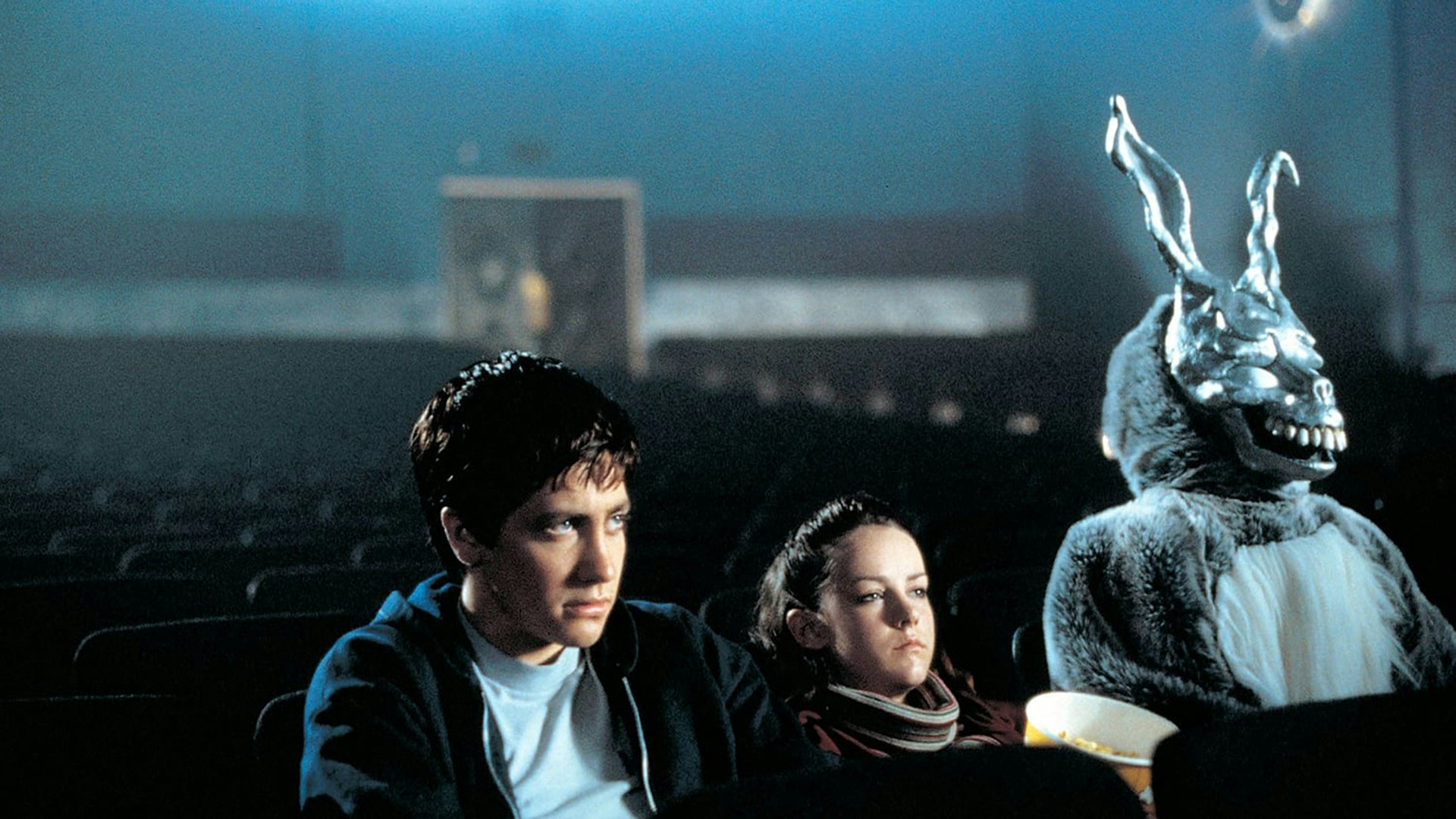
One night, Donnie narrowly escapes death when a jet engine crashes into his bedroom. Frank, who appears to him in hallucinations, informs Donnie that the world will end in 28 days. As the countdown progresses, Donnie begins to act erratically—flooding his school, burning down a motivational speaker’s house—and becomes obsessed with time travel and alternate realities.
At the same time, he forms a tender bond with Gretchen (Jena Malone), a new student with her own traumas. Their relationship offers a fleeting sense of stability amid the chaos. Donnie’s teachers, family, and psychiatrist try to help, but he drifts deeper into a metaphysical crisis.
The film weaves in themes of destiny, sacrifice, adolescence, and parallel universes, with its fragmented, nonlinear storytelling inviting endless interpretation. Is Donnie mentally ill or genuinely experiencing a supernatural phenomenon? Is he chosen to reset time and save others, even at the cost of his own life?

Jake Gyllenhaal delivers a career-defining performance, capturing Donnie’s vulnerability and volatility. The film’s moody cinematography, evocative ’80s soundtrack, and dreamlike pacing create a sense of eerie inevitability.
Donnie Darko defies easy categorization. It’s a teen film, a science fiction parable, and a tragic hero’s journey all at once. Its ambiguity is central to its enduring appeal: a puzzle-box narrative wrapped in emotional resonance, asking profound questions about fate, madness, and the meaning of existence
